
Relationship Anarchy: Is The Polyamory Community Where Revolutionary Anarchist Politics Went to Die?
When radical politics become a mere lifestyle.

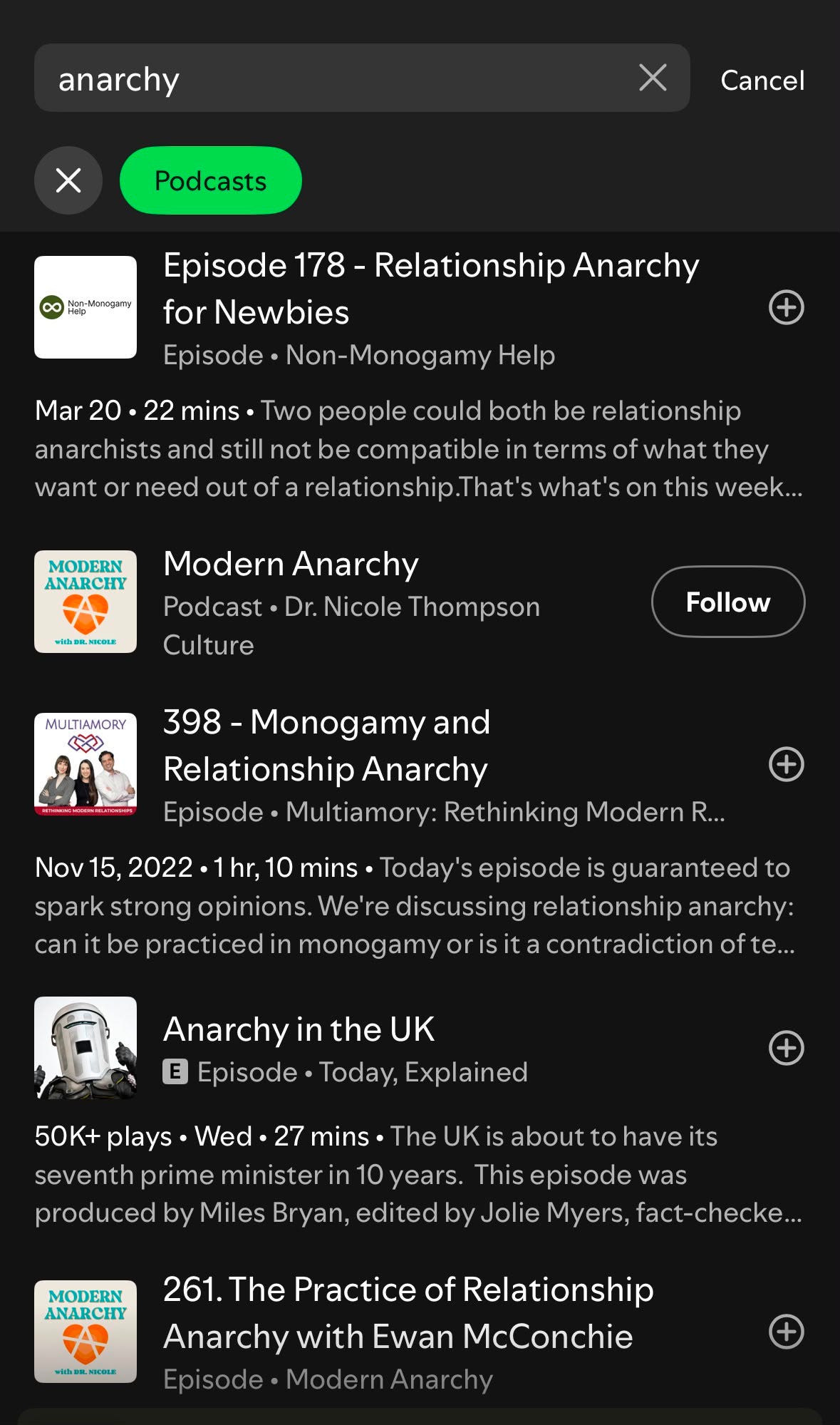
I was looking up podcasts on anarchism a week ago in preparation for a Relationship Anarchy conference I am organizing, and to my surprise most of the podcasts were about relationship anarchy by polyamorists, with relatively few focused on anarchism itself.
Relationship anarchy is the application of anarchist principles to interpersonal relationships: it rejects hierarchy in intimacy, resists *amatonormative assumptions, and emphasizes connection outside scripts.
Anarchism, by contrast, is a political project that extends that anti-hierarchical critique to communities, workplaces, the state, policing, prisons, and militarism.
*Amatonormative means assuming that everyone aspires to be in a romantic, exclusive, long-term partnered relationship. It also implies that romance is more important than friendships, extended family or community.
The same pattern exists on Instagram and across much of social media. That would not be a problem if the relationship anarchy being promoted online, primarily in polyamory communities, actually extended anarchist politics. But too often, it does not.
The issue is not that everyone who identifies as a relationship anarchist personally practices hierarchy. Many genuinely reject amatonormative hierarchies. They refuse to rank romantic partners above friends, biological family above chosen family, or intimate relationships above community. They strive to build relationships based on authenticity rather than socially prescribed status.
The issue is that, for many, the critique of hierarchy ends there.
Rather than seeing anti-hierarchy as a broader political commitment, they treat it as something that applies only within their personal relationships. It’s classic Western individualism. They may reject hierarchy in their own lives while arguing there is nothing ethically wrong with others embracing hierarchical relationships. Hierarchy becomes a matter of personal preference rather than political critique. Some even suggest it is unfair or unkind to expect people to consistently oppose hierarchy, reducing the conversation to individual consent (not even ongoing consent) while neglecting the broader structures of power that shape our choices.
That represents a significant departure from anarchism.
For anarchists, opposing hierarchy is not simply a lifestyle choice. It is an ethical and political commitment. Anarchists do not merely seek to organize their own lives differently; they seek to understand, challenge, and ultimately dismantle systems of domination wherever they appear. Just as anarchists do not regard capitalism, colonialism, patriarchy, or racism as morally neutral simply because individuals participate in them, hierarchy itself is not viewed as politically neutral.
The difference is subtle but profound. One position says, “I choose not to organize my own relationships hierarchically.” The other says, “Hierarchy is a form of domination that should be challenged wherever it exists.” The first is a personal practice. A lifestyle so to speak. The second is anarchist politics.
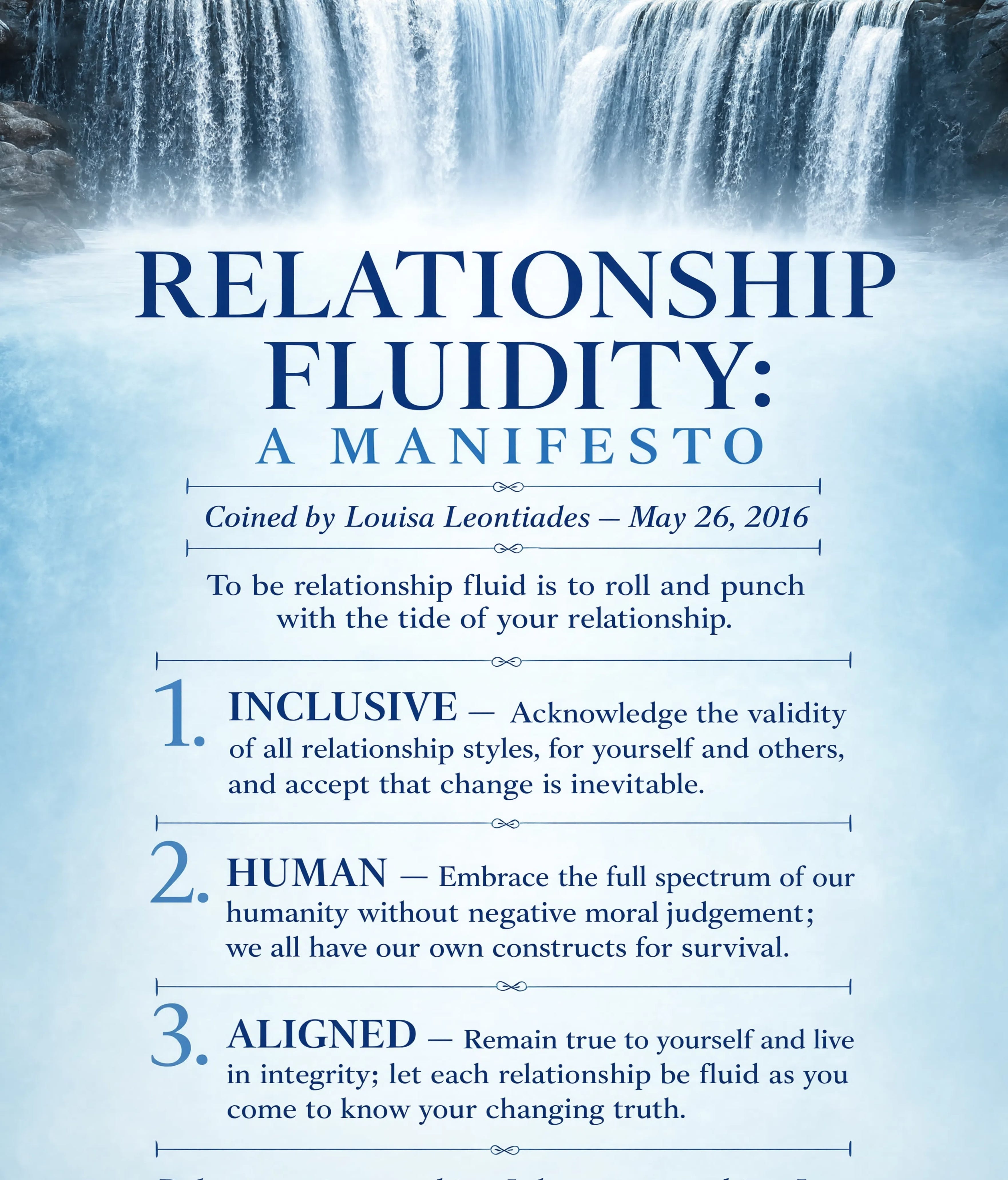
This is why I sometimes wonder why people who hold the first position continue to identify as relationship anarchists. If the commitment is to relationship flexibility rather than anti-hierarchical politics, there are already terms available, such as relationship-fluid. Those labels accurately describe a relational practice without borrowing the political language of anarchism.
I think part of the answer lies in a broader feature of Western political culture: its remarkable ability to claim emancipatory ideals while preserving oppressive structures. European colonialism justified conquest as bringing the Christian God’s message to “heathens.” The Enlightenment proclaimed universal equality while European empires expanded across the globe. The American Revolution declared that all people were created equal while continuing to enshrine chattel slavery. Again and again, colonial modernity has presented itself as liberatory while reproducing the worst social hierarchies.
Moral incongruity is the foundational cognitive dissonance of the colonial mindset
In that light it is unsurprising that people can call themselves relationship anarchists while fiercely defending the right of others to be hierarchical.
Instead of dismantling hierarchy, relationship anarchy has become a weapon to perpetuate systemic privilege: fuckboi poseurs use it as relational libertarianism to evade accountability and further patriarchy, while non-anarchist leftist women and non-binary people use it as an exercise in individual freedom that ignores structural power. In doing so, they simply continue their gendered role within patriarchy as coddlers of colonial fragility, using radical language to protect white, middle-class comfort from the discomfort of actual political accountability.
Ironies abound: both suffer from a fundamental commitment-phobia, one terrified of relational commitment, the other terrified of political commitment.
In both cases, anarchism is stripped of its collective responsibility and reduced to self-serving consumerism.
But hierarchy is precisely what anarchism opposes. Anarchism is often defined simply as opposition to the state. But that definition is incomplete. The state is only the most concentrated expression of hierarchy. More fundamentally, anarchism is a critique of authority, domination, and institutionalized hierarchy wherever they appear.
“The term anarchy comes from the Greek, and essentially means ‘no ruler.’
That is why anarchists have historically opposed not only the state, but capitalism, patriarchy, colonialism, racism, and every institution that grants some people structural authority over others.
This understanding emerged over two centuries of anarchist discourse. When Pierre-Joseph Proudhon declared that “property is theft” in 1840 and self-identified proudly as an anarchist, he was making one of the most radical political claims of his century. For over a millenia, “anarchy” had been synonymous with chaos. To argue that society could exist without rulers, governments, or institutional authority was almost unimaginable in Europe.
The generations of anarchists who followed expanded that insight. As Europe industrialized and capitalism produced new concentrations of wealth and power, anarchists argued that domination was not confined to monarchs or governments. Wherever hierarchy created relationships of command and obedience, oppression followed. They envisioned societies organized through voluntary association, mutual aid, worker self-management, and decentralized decision-making.
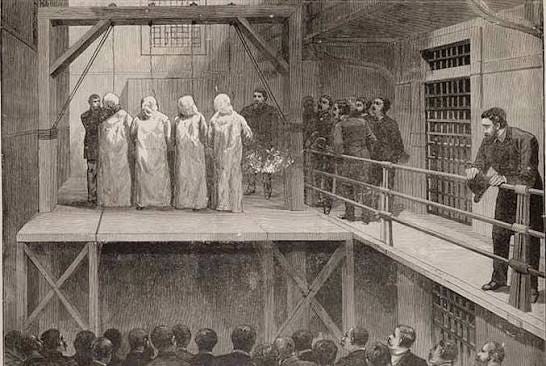
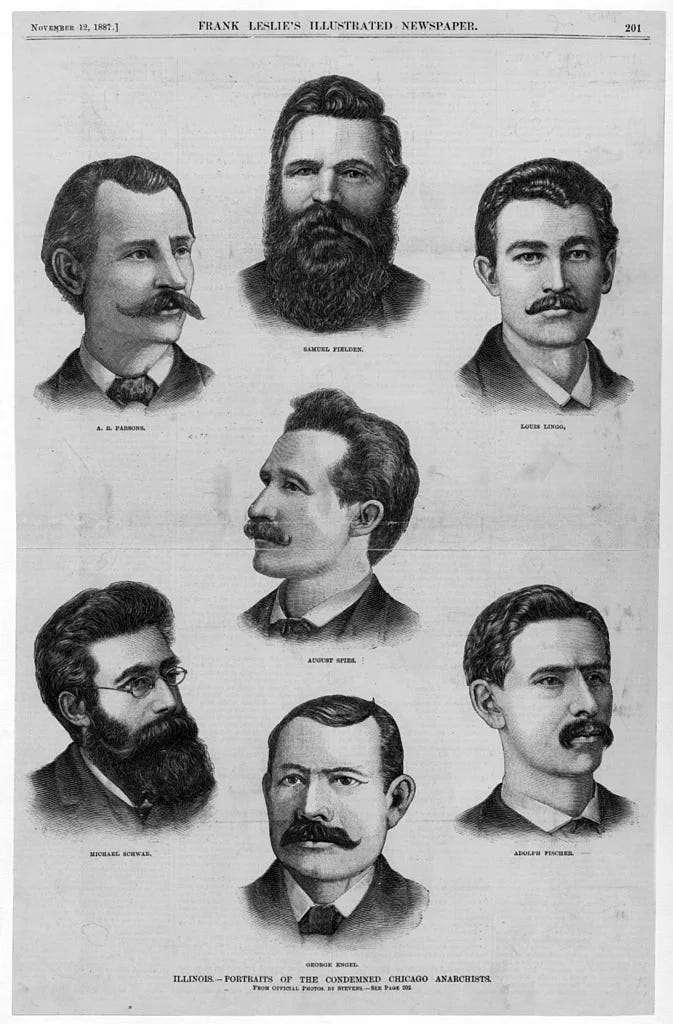
These ideas were considered dangerous because they challenged every institution that justified unequal power. Anarchists were imprisoned, exiled, censored, and executed precisely because they questioned hierarchy itself.

The Spanish Revolution of 1936 remains one of the largest historical attempts to build an anarchist society. Its defeat did not prove anarchism unworkable; it was crushed by military force and political repression. Franco’s fascist forces, backed by Hitler and Mussolini, attacked the revolution, and Stalinist forces also turned against the anarchists in Barcelona. U.S. policy under FDR helped ease restrictions that allowed oil to reach Franco’s regime. This is because anarchism threatens every concentration of political authority, whether fascist, communist, or liberal democracy.
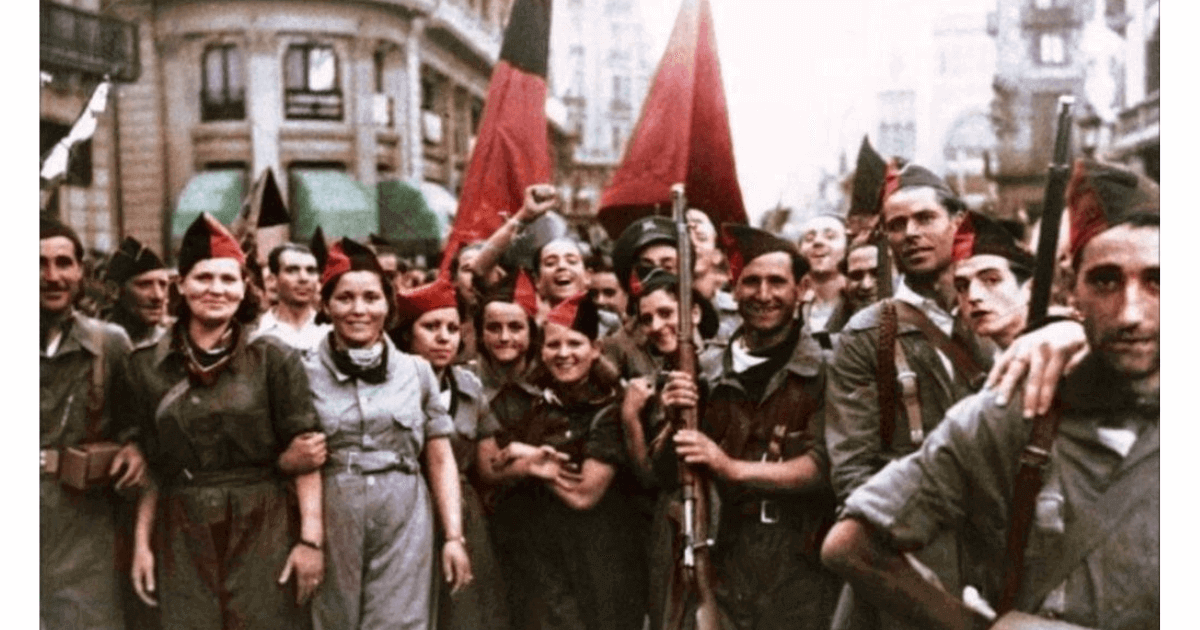

It still does.
Generations of revolutionaries dedicated and sacrificed their lives to dismantle hierarchy. Co-opting the language of anarchism while gutting its radical core is grotesque. It reduces a legacy of real, dangerous struggle into a mere lifestyle. It is an insult to the martyrs of the tradition and a complete surrender to the status quo.
Errico Malatesta, one of the most prominent theorists of the Italian anarchist tradition, famously asserted that anarchists have no adjectives. He was referring to the sectarian divides of his era between mutualists, collectivists, and anarcho-syndicalists. For Malatesta, internal theoretical debates mattered far less than their shared foundational premise: the total elimination of institutionalized authority and domination. That shared line in the sand defined the tradition. To apply his insight to our current moment: anti-hierarchy is not an optional flavor of anarchism, it is anarchism. If you aren't committed to ending hierarchy everywhere, don't hide behind an adjective because anarchists have no adjectives.
None of this means someone cannot be inspired by relationship anarchy without adopting the label. Juan Carlos Pérez Cortés, author of Relationship Anarchy: Occupying Intimacy, doesn’t call himself a Relationship Anarchist he uses the formulae "I'd like to live in (or near) the RA framework". I think that is an intellectually honest position. Likewise, someone may choose labels like relationship-fluid or simply describe themselves as practicing non-hierarchical relationships. There is nothing wrong with that.
What is problematic is borrowing the language of anarchism while abandoning its central political commitment, or even worse saying you’re a relationship anarchist and defending hierarchy.
I asked Andie Nordgren who co-coined Relationship Anarchy how she felt about relationship anarchy being treated as a lifestyle rather than an anarchist practice. They explained that relationship anarchy emerged partly as a response to anti-hierarchical polyamory, and that presenting it in a less explicitly political way was intended to create a doorway into anarchist politics.
I think that was a hopeful vision.
But I also think it has only been partially realized.
Today, many people understand relationship anarchy simply as non-hierarchical polyamory or as refusing to rank personal relationships. The broader anarchist project has largely disappeared from public understanding. Many anarchists dismiss relationship anarchy because they associate it with polyamory that borrows anarchist language without embracing anarchist politics. At the same time, anarchists who genuinely practice relationship anarchy have told me they struggle because people judge them because the label has become associated with ideas they do not share.
If a framework intended to introduce people to anarchist politics becomes better known for distancing itself from those politics, then we have to ask whether it has fulfilled its original purpose?
Yet I do not think the story ends there.
Relationship anarchy still contains enormous political potential. Early in her life, Emma Goldman advocated for political assassinations and violent uprising as the engines of revolution. But after being deported from the United States, for inspiring President McKinley’s assassination, and witnessing the brutal reality of Bolshevik Russia, her perspective shifted profoundly. Seeing Lenin’s regime turn its violence not just against the Tsar, but against everyday Russians and fellow anarchists, Goldman realized that macro-level political destruction was not enough. A true revolution could not simply consist of overthrowing governments or abolishing institutions; it required transforming how we love, care for one another, and relate in everyday life. For Goldman, we must build the world we want to see within our personal relationships first, because a society free of domination cannot emerge if we continue reproducing hierarchy in our closest intimacies.
In that sense, relationship anarchy remains profoundly anarchist, because it invites us to prefigure an anti-hierarchical world through our personal relationships.
The task now is to recover that political horizon.
I do not believe this can be accomplished simply by rewriting a manifesto. Once ideas disseminate, it’s too late to take it back. We have already seen this happen elsewhere in the polyamory community. Joreth the Innkeeper once distinguished between “descriptive” and “prescriptive” hierarchy before later arguing that all hierarchy is inherently disempowering. 6 years later, the original distinction continues circulating because it offers people a way to preserve hierarchy while continuing to claim anti-hierarchical language.
Political language is always vulnerable to co-option.
But that does not mean we surrender the politics.
For centuries, “anarchy” meant chaos to most people. For many, it still does. Yet generations of anarchists continued organizing, writing, teaching, and living their politics until the word came to represent something more profound than the caricature.
The same responsibility belongs to us.
If relationship anarchy is to remain worthy of its name, we must truly treat it as an invitation into anarchism rather than as a lifestyle identity. That means returning to consciousness-raising, intellectual honesty, reading, theorizing, debating, and continually challenging our own assumptions. Fascism thrives on anti-intellectualism and contradiction. Anarchism has always demanded the opposite: rigor, consistency, and the courage to align our practices with our principles.
Relationship anarchy should not be the destination. It should be the doorway as Andie Nordgren hoped.
The destination is, and has always been, a world without hierarchy.
That is why I am organizing the first Relationship Anarchy Conference With Actual Anarchist Speakers.
How we structure our relationships should help us understand, challenge, and ultimately dismantle hierarchy throughout society.
To explore that connection, I have invited five speakers, four of whom are ⒶAnarchist thinkers and organizers whose work bridges intimate relationships with broader anarchist politics.
Dr. Juan Carlos Pérez Cortés, author of Relationship Anarchy: Occupying Intimacy, will explore relationship anarchy as a political philosophy of interdependence rather than merely a relationship style.
ⒶRomeo Côté, a Métis organizer and founding member of the Indigenous Anarchist Federation, will discuss Indigenous anarchism and anti-colonial traditions of organizing beyond the state.
ⒶPrince Shakur, writer and organizer, will introduce the history of Black anarchism and abolitionist thought in the context of rising fascism in America.
ⒶClementine Morrigan, writer and organizer will examine how communities can move beyond punitive and carceral approaches to conflict, exploring transformative alternatives to cancel culture.
ⒶSerena Purdy, former Canadian federal NDP candidate, will discuss pragmatic anarchism, community organizing, and the relationship between electoral politics, harm reduction, and building horizontal forms of power.
My hope is that everyone who attends attends this conference is inspired to be an anarchist. If relationship anarchy is going to have the word “anarchy” in its name, then it should invite us into the long intellectual tradition, history, and practice of anarchism itself. It should encourage us to read, to think critically, to challenge hierarchy wherever we encounter it, and to imagine how the anti-hierarchical relationships we build in our personal lives can become part of a broader struggle for a world without domination.
Fascinating! A few years ago I went looking for an alternative to the white guy style of anarchism podcasts. I found Dr. Nicole’s Modern Anarchy. While they may not address the downfall of the State directly, I have found they have a perspective on RA that confronts bias in their profession of psychology. Some guests may be more activist minded than others. They also constantly point to capitalism as a threat to non-dominant communities and liberation. We aren’t all the Molotov type of anarchists but choose our own path to resistance and surviving fascism.