
Polyamory is Not for Boys
The Failed Gambit: Why Klay Thompson and David Harbour Prove Patriarchy Can’t Hack ENM

I used to anxiously worry that patriarchy would eventually co-opt polyamory. So many things that started out as liberating, countercultural, underground, or too foreign, once they gained mainstream attention, were quickly co-opted by a colonial institution and lost their soul: yoga, rock music, streetwear, matcha, nomadism. Even authenticity has been commodified as a social media trend. Once the evil eye of Sauron casts its gaze on something with power and vitality, it appropriates it and drains the life out of it, leaving behind only a hollow shell.

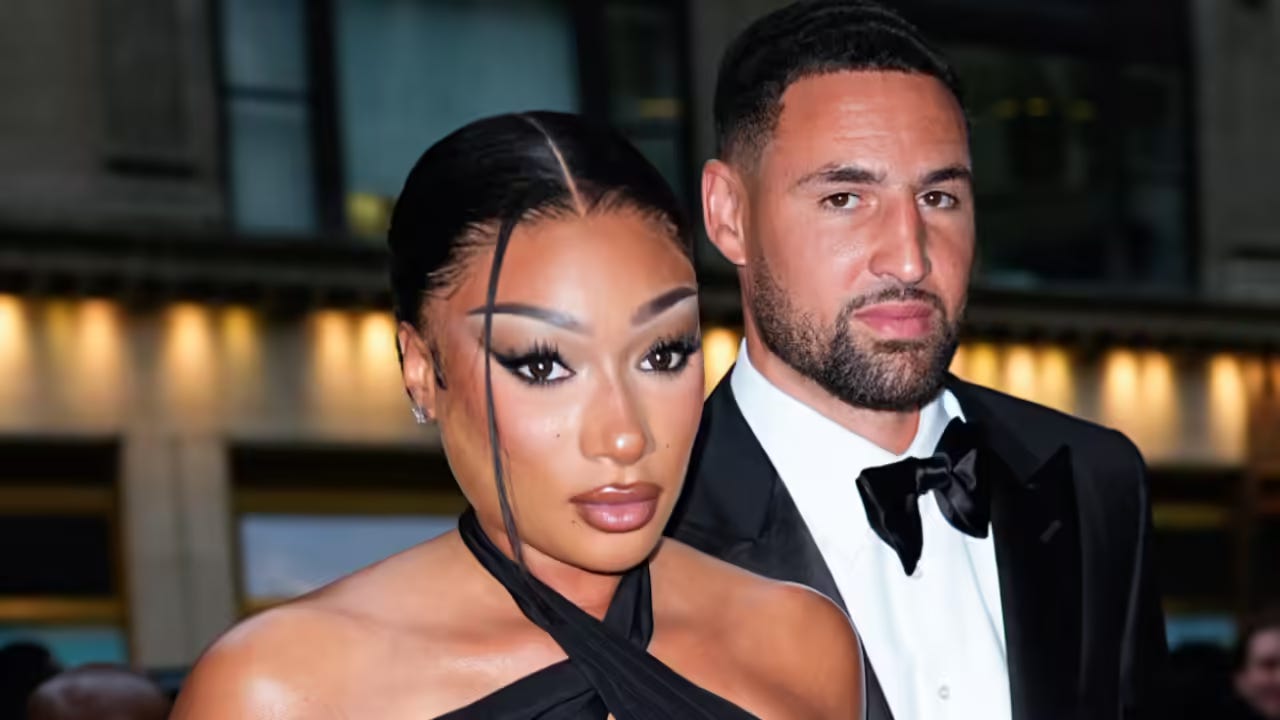
Patriarchy would inevitably gaze at polyamory because patriarchy is addicted to the fantasy of male sexual freedom, and in polyamory, it could see another avenue to pursue that Valhalla. But the news about rapper Megan Thee Stallion dumping her boyfriend NBA player Klay Thompson because he cheated and tried to spin it as his non-monogamy needing to break free, made me realize that actually patriarchy won't find a magical loophole in polyamory.
Polyamory is a relationship orientation in which a person is capable of loving multiple people simultaneously and it is practiced transparently with the informed consent of everyone involved. The crux of why patriarchy will always fail in polyamory is its relationship with consent.
Patriarchy is a binary system that places men at the top of the social hierarchy. It is necessarily coercive as it socializes men to strive for power and dominance. The opposite lesser on the binary is the feminine which in patriarchy is characterized as weak and emotional. Men are taught that the worst thing they can be is feminine, because vulnerability is the opposite of strength and power.
But polyamory demands precisely what patriarchy halts in men. It requires emotional vulnerability, because genuine transparency is impossible without the willingness to be honest about desire and needs. It also requires deep respect for women’s autonomy, because informed consent is impossible without seeing women as full people whose choices over their bodies matter. Because of this, polyamory is structurally incompatible with the patriarchal man.
The dislike of consent is also why conservatives hate polyamory. Patriarchy has never had a problem with men having multiple partners, high body counts, or affairs. That is considered natural, even aspirational. What patriarchy cannot tolerate is the equality, the idea that women's desires carry the same weight as men's. In patriarchy, sex is not an act of mutual vulnerable connection; it is conquest. It’s why the term body count now used to reference how many people someone has slept with, originally indicated the number of people killed in combat during the Vietnam War. It’s why the word vagina comes from the latin word sheath, which is the resting place for a sword. When sex is framed as a conquest, the focus shifts from mutuality to winning at any cost. In this mindset, consent isn't a requirement; it's just an obstacle to the objective. Compulsory monogamy culture was not a social construct to protect love. It was designed to manage women.
The history of monogamy is rooted in the major human shift from hunter-gatherer societies to the agricultural revolution around 10,000 years ago. With settled farming, male labor became essential, and land inheritance gained importance, leading to the rise of patriarchy. As communities grew more established, the focus on inheritance and property rights created a need to control lineage to ensure resources stayed within a family. This marked a shift from more communal, flexible relationships, where paternity was less relevant because children were raised collectively, hence the saying, "it takes a village to raise a child." And moved toward stricter, monogamous unions, where men’s lineage and control over women’s sexuality became central.
As societies grew larger and more complex, lineage became even more critical for stable governance, with power transferring from ruler to offspring. Too many heirs often led to conflict, so a controlled hierarchical family structure became essential.

With the expansion of empires like Rome, and later through European colonization, the importance of regulating family structures only intensified. Religion then reinforced these ideas, framing monogamy as the moral standard and embedding it deeply into social expectations. Today, nearly every culture has adopted monogamy as the norm, often forgetting its origins in controlling resources and power.
But the clues are in our language. Just like vagina comes from the Latin word for sheath, the word colonization stems from colonus the latin word for farming and the word family from the latin familia meaning the slaves of man. Yes we are living inside a patriarchal relational order descended from Roman imperial logic.
But as Nemik says in Andor, “The Imperial need for control is so desperate because it is so unnatural. Tyranny requires constant effort. It breaks, it leaks. Authority is brittle.”
And that is exactly what we see when patriarchs try to dominate women while practicing unethical non-monogamy. The structure cannot hold. It leaks. It breaks. It reveals itself constantly in modern dating culture.
With a Bachelor of Science in Health Administration, a $40 million net worth, and a feature in People magazine's 'Beautiful Issue,' Megan Thee Stallion is the epitome of an intelligent, successful, and beautiful Black woman. To a patriarch, she is the ultimate trophy partner. Klay Thompson did exactly what patriarchy teaches men: pursue whatever grants you more power and social respect, by any means necessary. He future-faked a relationship with a woman who had lost her parents and grandparents, drawing her into his family to deepen her attachment.
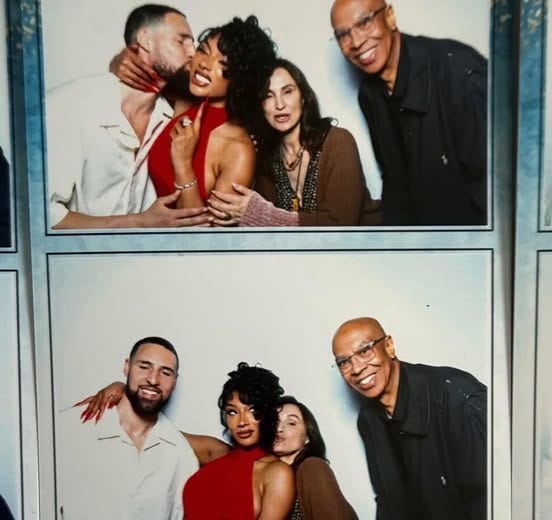
Then came the bait-and-switch, cheating on her during the grueling pressure of her Broadway debut.
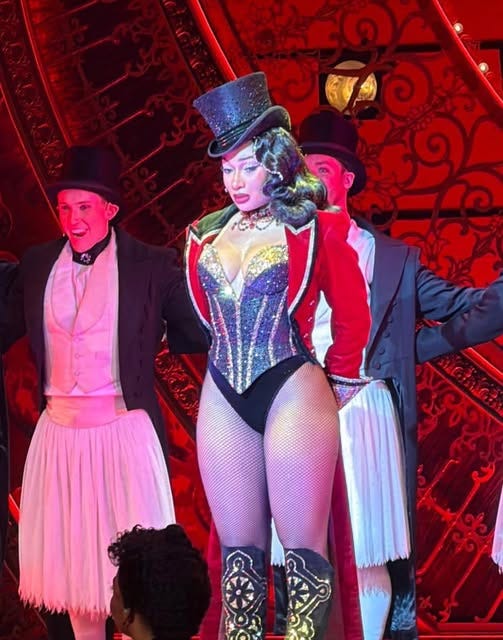
The patriarchal shortcut is to cheat, and then use that infidelity as a chaotic segue into opening the relationship. He reframed his betrayal as a need for non-monogamy, calculating that because Megan is sexual, progressive, and intelligent, she would naturally accept it. It was a glorious miscalculation.
Megan Thee Stallion rightfully refused to play along. Historically, Black women have often been pressured to cover for the problematic behavior and abuse of Black men, forced to hide behind a code of silence because bringing external authorities into the community could yield disproportionately dangerous ripple effects. White supremacy would use any excuse to be further oppressive to Black folks. Megan broke that scepter of multiple intersecting oppressions though. She did not cover for Klay Thompson’s cheating behind closed doors, nor did she quietly break up. Just as she had years previously refused to cover for Tory Lanez after he shot her, which led to his imprisonment. Megan repeatedly refuses to abide by the patriarchal rules of female obedience, no matter how intensely the system of misogynoir (misogyny against Black women) tries to break and mold her. She outed Klay’s infidelity on Instagram, exposing the reality that cheating disguised as non-monogamy is just traditional patriarchal entitlement.

Non-Monogamy Under Duress
Megan is not the only high-profile woman to experience a partner attempting to slip non-monogamy under the door via duress. Actor David Harbour and musician/actor Lily Allen offer another cautionary tale.
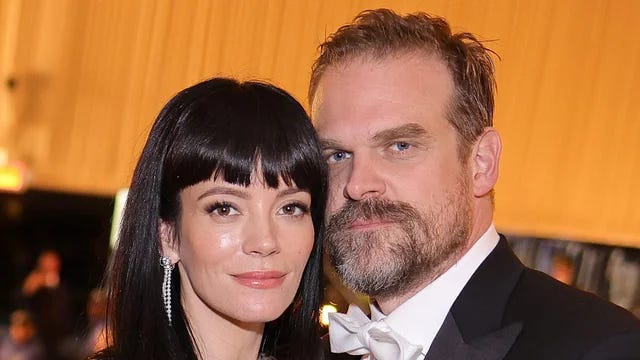
David took future faking a step further marrying Lily and embedding himself in her life as a stepfather to her children, only to reportedly become insecure when she secured a West End theater gig without even auditioning. So while Lily was away working in London, that was when he decided it was the opportune time to open their relationship. The agreed-upon rules were subsequently broken, and Lily divorced him and wrote about what transpired in her next album West End Girl.
This is the patriarchal idea of non-monogamy in action: it is deployed as a tool for control or a salve for male insecurity, and enacted when the female partner is distracted, working, or geographically distant. It is not an expansion of mutual love; it is a tactical maneuver.
It doesn’t quite work though on powerful women who are leads on stage though. But unfortunately it does on women more disempowered.
We see this mirrored endlessly in the modern manosphere. In Louis Theroux’s Netlix documentary exploring these spaces, ultra-masculine influencers like Myron Gaines advocate for one-sided non-monogamy, awkwardly posturing to appear hyper-masculine while his fiancé visibly signaled her discomfort.
Similarly, influencer Justin Waller promotes a one-sided open relationship with his life partner.
The documentary suggests that this immature posturing is partly a compensation for unresolved childhood wounds, especially father absence and overbearing mothering, which leave some men performing a distorted caricature of dominance in an effort to one-up women. Justin Waller, for example, grew up in an abusive household with a single mother.
Celebrities like Ne-Yo and Nick Cannon also practice one-sided non-monogamy. Ne-Yo lives with three girlfriends, while Nick Cannon has twelve children with six women.
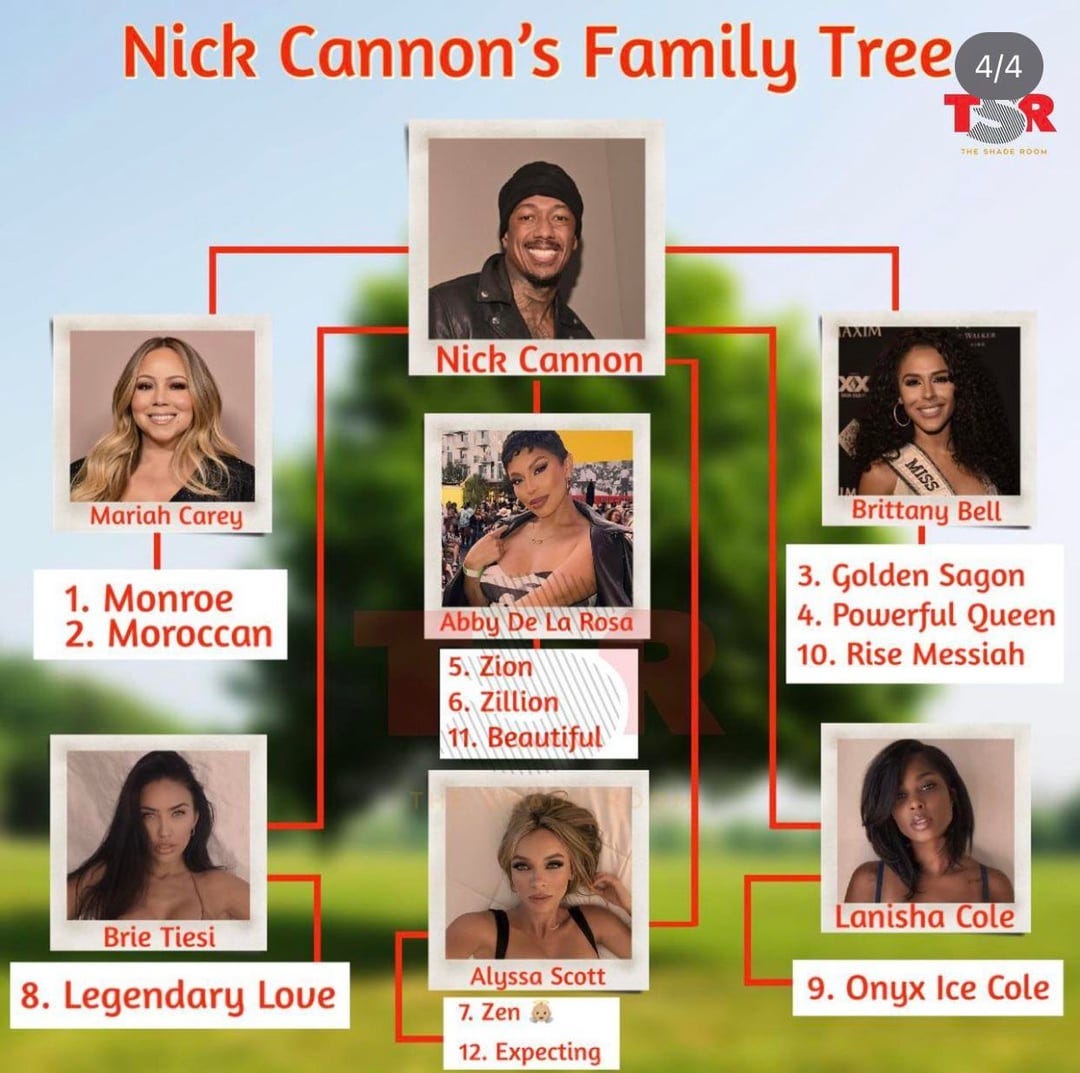
Cannon has said that his relationship with the musical icon Mariah Carey left him feeling insecure, and that insecurity shaped how he moved afterward. Both Canon’s and Ne-Yo’s non-monogamy arrangement is sustained by a stark imbalance. Their non-monogamous partners are not women with comparable fame, wealth, or public influence; they are far less known and far less powerful. Non-monogamy under duress, or asymmetrical openness, depends on female dependency. Patriarchal non-monogamy tends to collapse the moment it has to contend with women who are equally wealthy, famous, and independent.
The Feminism of Polyamory
There is a reason polyamory has largely been shaped by feminist thinkers. The term polyamory was coined by Morning Glory Zell-Ravenheart in 1989. True ethical non-monogamy is deeply compatible with feminism, not only because it emphasizes ongoing consent and radical transparency, but because it dismantles the idea that women are property, existing without sexual desire of their own. Patriarchy depends on treating women as property, hence the historical passage from a father’s name to a husband’s. It also depends, as Justin Waller showed earlier, on the belief that a “real” woman does not desire other partners once she is in love.
But psychotherapist Esther Perel has pointed out, women actually get bored with monogamy much sooner than men do. She challenges the patriarchal assumption that women possess lower libidos, arguing instead that women care less about the predictable sex they have in committed relationships, which often ceases to be interesting to them. This pattern of female desire for novelty appears most robustly among women who are financially independent and socially embedded in environments where non-monogamy is visible and viable.
But true polyamory is emotionally taxing. Research indicates that while people in non-monogamous relationships often experience lower levels of sexual jealousy, they face significantly greater demands regarding emotional processing. It requires constant reassurance, respect, and deep internal work.1
This is the kind of long-form feminist cultural analysis I write for readers who want more than hot takes. If you believe in women doing independent public intellectual work, paid subscriptions help make that possible.
Oil and Water: The Inevitable Collapse
This is why patriarchs trying to practice and co-opt polyamory will inevitably fail. Being both ethically polyamorous and patriarchal is like mixing oil and water. The patriarchal version of non-monogamy is a parasitic one; it can only survive in the presence of a partner's dependency. It finds a home among the disempowered, but it is fundamentally incapable of contending with the very women patriarchy deems the real prize. The facade almost always collapses into one of two familiar defaults: a retreat back into monogamy to regain control over women’s sexuality and because it emotionally requires less of men, or a slide into patriarchal one-sided non-monogamy.
Men like Klay Thompson can try to rebrand cheating as a need for ethical non-monogamy, but the moment genuine reciprocity enters the room, patriarchy panics. Because women like Megan Thee Stallion and Lily Allen, feminists who use their voices and their pens to speak truth to power, were never going to quietly submit to a one-sided arrangement. They demand reciprocity, transparency, and gender equality.
And that is exactly why polyamory and patriarchy will never fully work together. Polyamory requires the very thing patriarchy was built to destroy: gender equality. Patriarchy does not want mutual freedom; it wants the benefits of non-monogamy without practicing the ethics.
Polyamory is only for full grown men. Men with emotional range, the ability to self-regulate, and the maturity to see women as autonomous beings rather than property. The patriarchal man has none of this. He is a boy in a grown body, and polyamory is not built for boys.
Polyamory is the Venus flytrap of modern dating. It lures patriarchal men with the promise of freedom, only to expose that they were never committed to the ethics of polyamory, but only to expanded sexual access. Once exposed, the jig is up for them. Polyamory as a movement meanwhile, stays intact and stays making room for the kind of men patriarchy is not able to raise.
https://www.theguardian.com/lifeandstyle/2026/may/08/women-polyamory-open-marriage
B.O.Y. = Burden On You
M.A.N. = Manages All Needs
🕉️🪬🙏🏽🫂🫶🏽🫂🙏🏽🪬🕉️
I love the Venus Flytrap metaphor!
I can forgive Perel's generalization about women as I appreciate her observation that, It is not that she doesn't want sex. She just doesn't want sex with you."
I came of age in the 1950's, immersed in the miasma of patriarchy, colonialism, zionism, sex negativity, and racism, with no meaningful sex education and lots of insane folklore about sex and how a guy gets it. I still ponder how I was able to extricate myself from it and find wonderful poly partners. One hypothesis that I think is true for myself and my life partner, and a few of our partners, at least, is that we grew up feeling othered and outcast. Our reaction was not to feel cowed, or victimized, or to try to assimilate. We got pissed off. Our response was to question how much of the colonial, patriarchal, capitalist, christofascist, pscychopathocracy worked for us. As it turned out, not much.